Amla Powder Benefits for Hair and Skin

Amla, the Indian gooseberry, has held a steady place in Indian homes long before it appeared on supplement shelves. Grandmothers stirred its powder into hair oil, soaked it overnight for the morning rinse, and folded the tart fruit into chyawanprash for the cold months. It is one of the few ingredients that earns its keep both in the kitchen and at the dressing table, and the reason is simple: amla is unusually rich in vitamin C and plant antioxidants that the body and skin both rely on.
This guide looks at what amla powder actually does for hair and skin, how to use it without guesswork, and where it fits in a calm daily routine. We will keep the claims grounded in what the herb is good at supporting day to day, give you specific amounts and timings, and skip the overstatement. Whether you are dealing with dull strands, an itchy scalp, or skin that has lost its brightness, amla is a quiet, dependable place to start.
What Is Amla and Why It Matters
Amla (Emblica officinalis) is a small, pale-green sour fruit that grows across India. When dried and milled, it becomes a fine khaki-coloured powder with a sharp, slightly bitter scent. In Ayurveda it is classified as a rasayana, a category of rejuvenating herbs traditionally used to support vitality and slow the visible signs of ageing. It is also the central ingredient in Triphala, the well-known three-fruit blend.
What makes amla stand out is its density of vitamin C and polyphenols such as tannins and flavonoids. Vitamin C is a cofactor your body uses to build collagen, the protein that keeps skin firm and hair follicles anchored. The antioxidants help neutralise the free radicals generated by sun, pollution, and everyday stress, which is the slow wear that shows up over time as dull skin and brittle hair. Used consistently, amla supports the conditions in which healthy hair and skin can do their job.
Tip: Heat degrades vitamin C. When you want amla for its antioxidant value, mix the powder into cool or lukewarm water rather than boiling it, and use it reasonably fresh after opening.
Amla Powder Benefits for Hair
Hair care is where amla has the longest track record. It is gentle enough for regular use and works on the scalp and the strand at the same time. Here is what consistent use tends to support.
Stronger Roots and Less Breakage
Amla's vitamin C and antioxidants support collagen formation and a healthy scalp environment, which is the foundation hair grows from. Many people use it to support fuller-looking hair and to reduce the everyday breakage that comes from weak, dry strands. It will not work overnight; think in terms of a few weeks of regular use before you judge the results.
A Calmer, Cleaner Scalp
The tannins in amla have a mild astringent and clarifying quality. An amla rinse or mask can help settle an itchy, flaky scalp and remove the buildup of oil and product that dulls the roots. People with oily scalps often find amla a useful weekly reset.
Shine and Manageability
Amla is traditionally credited with helping hair look darker and glossier. While it is not a dye, the tannins can deepen tone slightly over time and smooth the hair cuticle, which is what gives strands that reflective shine. It also pairs naturally with oils, which is why amla-infused hair oil is such a classic.
- Supports stronger roots and reduced breakage through better scalp and collagen support
- Helps clarify oil and buildup for a fresher scalp
- Adds natural shine and smoothness to the hair cuticle
- Pairs well with coconut or sesame oil for a nourishing pre-wash treatment
Amla Powder Benefits for Skin
The same properties that help hair translate well to skin. Amla is best thought of as a brightening and firming support ingredient rather than a quick fix.
Because vitamin C is central to collagen production, amla supports skin elasticity and a firmer texture over time. Its antioxidant load helps defend against the daily oxidative stress that leaves skin looking tired and uneven. Used as a mask, amla's astringency can help tighten the look of pores and balance excess oil, which makes it friendly to combination and oily skin. Many people also reach for it to support a more even, naturally radiant complexion, since vitamin C is involved in keeping pigmentation balanced.
- Supports collagen and firmer-looking skin
- Antioxidant defence against pollution and sun-related dullness
- Helps balance oil and refine the look of pores
- Encourages a brighter, more even-toned complexion with regular use
Amla rewards patience over intensity. A little, used regularly, does far more than a lot used once.
How to Use Amla Powder: Practical Recipes
Amla powder is flexible. Below are simple, tested ways to bring it into your routine. Start with the smaller amounts and adjust to your hair length and skin sensitivity.
Amla Hair Mask
- 1Mix 2-3 tablespoons of amla powder with warm water to form a smooth, spreadable paste. Add a teaspoon of yoghurt or honey for extra moisture if your hair is dry.
- 2Apply from scalp to ends and leave on for 20-30 minutes; do not let it dry out completely.
- 3Rinse thoroughly with lukewarm water, then shampoo as usual. Use once a week.
Amla Pre-Wash Hair Oil
- 1Gently warm 4-5 tablespoons of coconut or sesame oil and stir in 1-2 tablespoons of amla powder.
- 2Let it infuse off the heat for a few hours, then strain if you prefer a clear oil.
- 3Massage into the scalp and lengths an hour before washing, ideally the night before for a deeper treatment.
Amla Brightening Face Mask
- 1Combine 1 teaspoon of amla powder with enough honey or plain yoghurt to make a paste.
- 2Apply an even layer to clean skin, avoiding the eye area, and leave on for 10-15 minutes.
- 3Rinse with cool water and follow with your usual moisturiser. Use once or twice a week, and do a patch test on your inner forearm first.
Patch test every new mask. Apply a small amount to your inner forearm and wait 24 hours. Amla is acidic, so anyone with very sensitive or reactive skin should start with a shorter contact time.
Taking Amla Internally
Healthy hair and skin are built from the inside as much as the outside, and amla works well taken internally too. A typical supportive dose of amla powder is 3-5 g (about 1 teaspoon) once daily, stirred into a glass of cool or lukewarm water, ideally in the morning on an empty stomach. The taste is sour and astringent, so a little honey helps. You can also fold it into a smoothie or a glass of buttermilk.
Consistency matters more than quantity. A modest daily amount over several weeks does more for your skin and hair than occasional large doses. If you already take Triphala, you are getting amla as one of its three fruits, so there is no need to double up heavily.
If you are pregnant, nursing, taking medication, or managing a health condition, speak to your physician or a qualified Ayurvedic practitioner before adding amla as a daily supplement.
Choosing a Good Amla Powder
The quality of the powder decides the result. Vitamin C is fragile, so how the fruit is dried and stored matters a great deal. Cheaper powders are often over-processed, heavily heat-dried, or padded with fillers, which strips much of the value you are paying for.
- Look for pure, single-ingredient amla with no added starch, colour, or fragrance
- Prefer organically grown fruit to avoid pesticide residue, especially for internal use
- Choose a fine, khaki-green powder with a fresh, sharp scent; dull brown and odourless usually means age
- Buy in sensible quantities and store in an airtight container away from heat and light
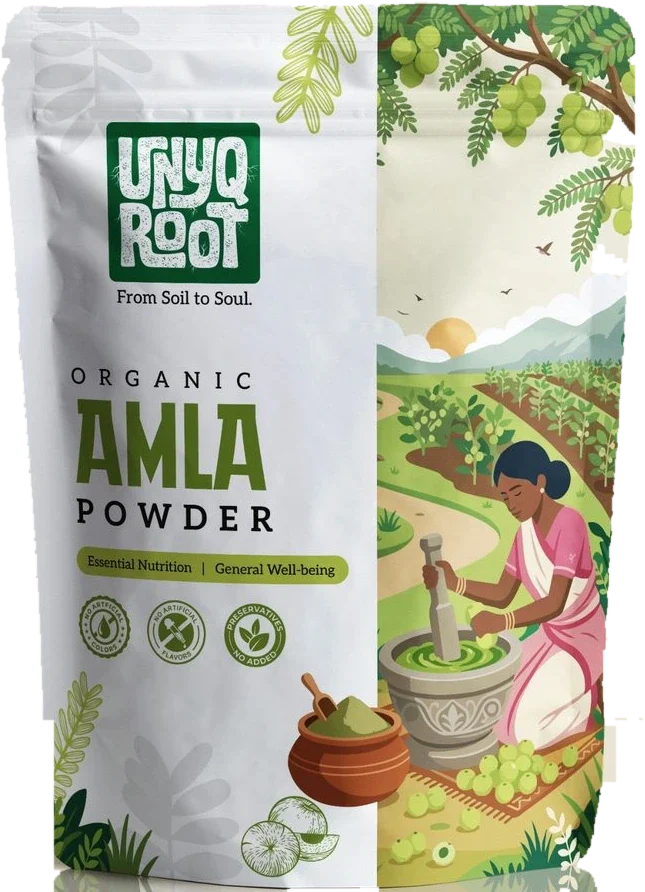
UNYQROOT amla is single-origin and organically grown, milled to keep its natural vitamin C and antioxidant content intact, which makes it dependable whether you are mixing a hair mask or taking a daily teaspoon. The same care that goes into our soil is what shows up in the powder, which is the whole point of From Soil to Soul.
A Simple Weekly Routine
You do not need a complicated regimen. Here is a realistic way to weave amla into a normal week without it becoming a chore.
- 1Daily: 1 teaspoon (3-5 g) of amla powder in lukewarm water in the morning.
- 2Once a week: an amla hair mask or pre-wash oil treatment.
- 3Once or twice a week: an amla brightening face mask, with a moisturiser afterwards.
- 4Give it 4-6 weeks before judging results, and keep notes on what your hair and skin feel like.
Amla is not a single-use miracle and does not pretend to be. It is a steady, well-rounded support ingredient that earns its reputation through regular, unglamorous use. Treat it as one calm habit among several, pair it with enough water, sleep, and a balanced diet, and it will quietly do its part for your hair and skin.
Bring Amla into your routine
View productFrequently asked
Most people notice shinier, less brittle hair within a few weeks, while changes in strength and fullness usually take 4-8 weeks of consistent weekly masks or oiling, supported by daily intake.